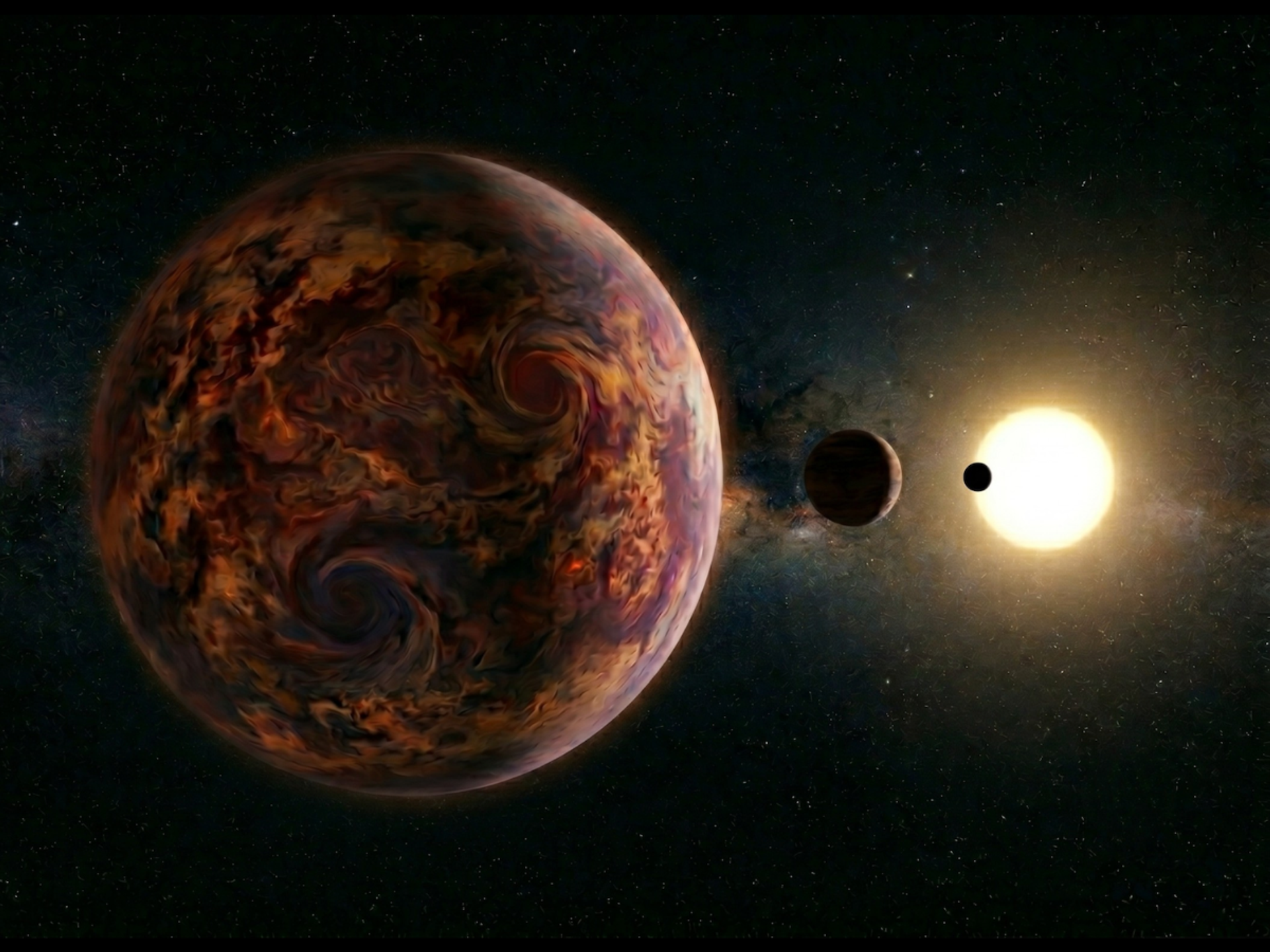
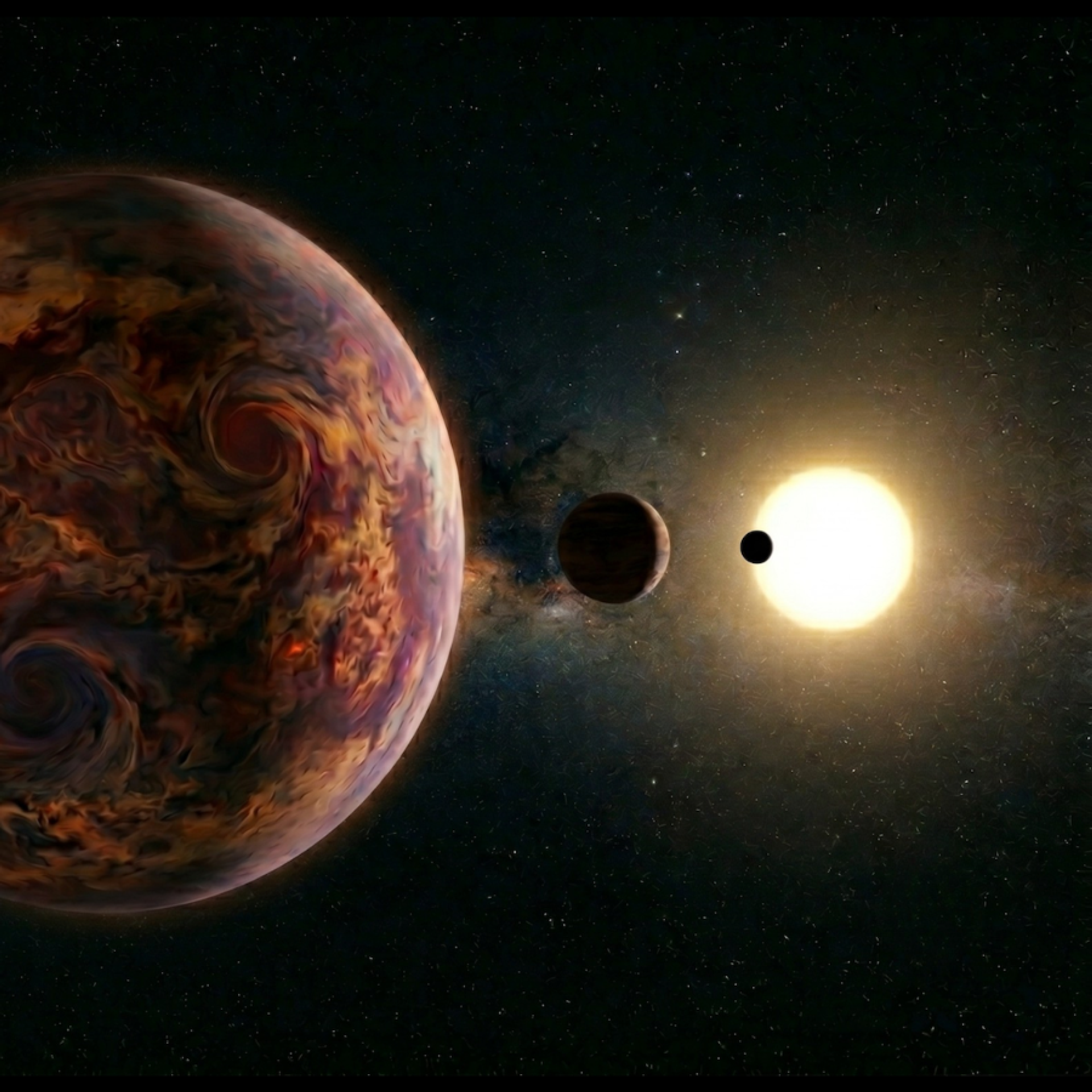
Telescópio James Webb observa pela 1ª vez mudanças nas nuvens de água fora do Sistema Solar (FOTOS)
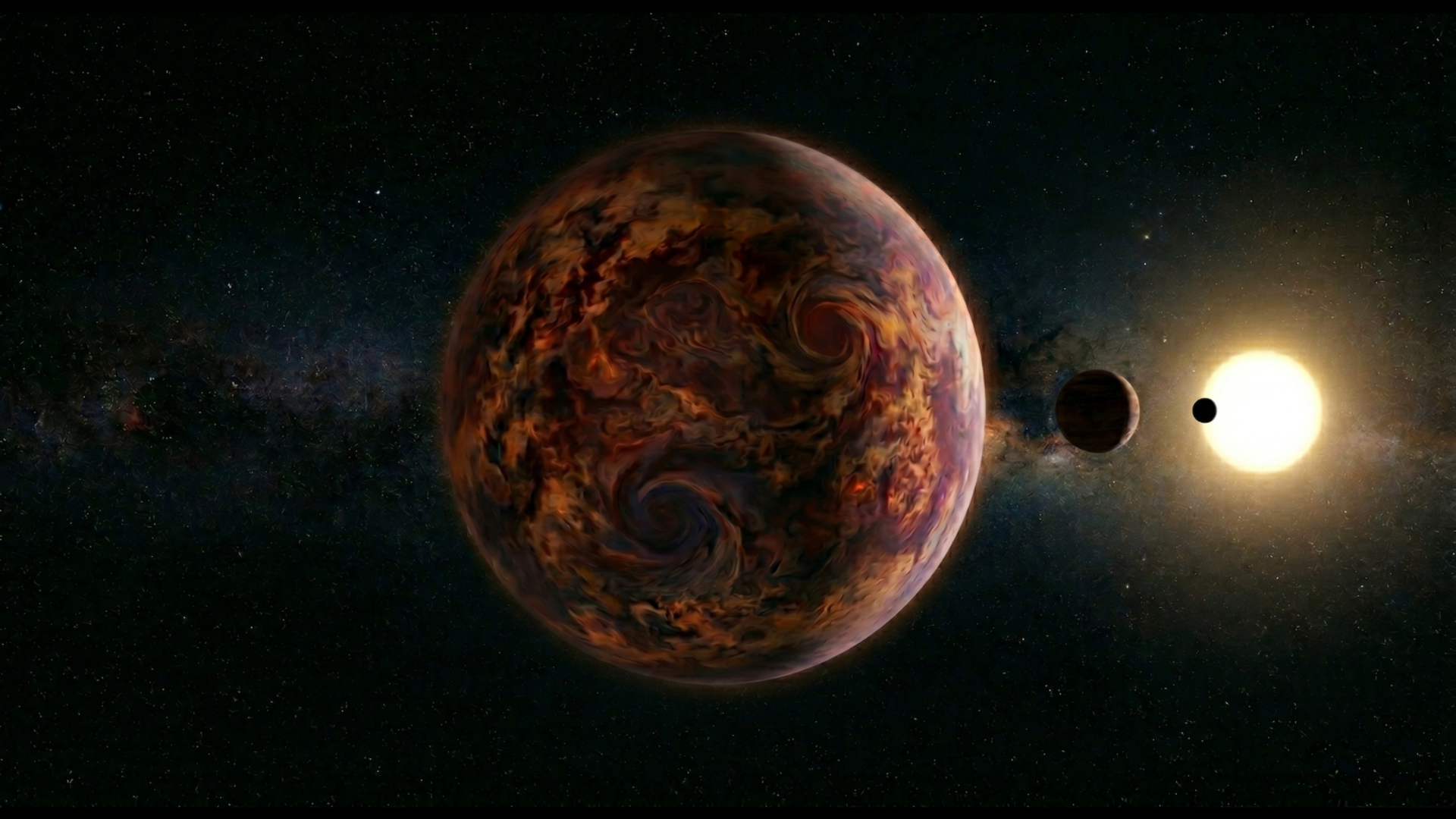
James Webb observou o objeto ininterruptamente por 11 horas e recebia um novo espectro a cada 15 minutos. Isso permitiu rastrear mudanças na atmosfera à medida que a anã marrom gira.
The coldest known brown dwarf just blinked. Not metaphorically: WISE 0855, a 250–265 K failed star only 2.2 parsecs away, spent 11 hours under JWST/NIRSpec and showed carbon monoxide absorption swinging by as much as 10 percent peak-to-peak. That’s not a quiet iceball. That’s weather. The first medium-resolution spectroscopic movie of the object. Previous snapshots fought over water ice for a decade: Gemini’s 2016 M-band hinted at clouds; later JWST/NIRSpec cloudless models looked fine; MIRI found water vapor depleted aloft – condensation happening – yet no smoking-gun ice spectral fingerprint. Time did what a single spectrum could not. Patchy water clouds plus quenched chemistry from the deep now fit both the mean shape and the wiggles. A Jupiter that never saw a Sun, frozen to kitchen-freezer temperatures, rotating (maybe) every five and a half hours – except the clock refuses to keep time across Spitzer and JWST epochs. Upstairs: water-ice decks of uneven thickness mute the water-vapor bands so they barely twitch. Downstairs, tens of bars deep, convection dredges CO and PH₃ that chemistry should already have cooked into methane and other equilibrium leftovers. Those two gases rise and fall together (PCA’s second eigenvector, 4.7 percent of the variance). The first eigenvector • 60 percent of the show • is broader: a one-kelvin “effective temperature” slosh that is really cloud cover changing the depth you see. They did not catch a crystalline ice absorption line dancing in isolation. They caught the pattern that water-cloud thickness at low pressure plus abundance patches at quench pressures (CO near 70 bar, PH₃ near 24 bar) reproduce the wavelength-dependent light curves better than temperature or clouds alone. Vertical mixing strength inferred molecule by molecule refuses to increase with depth, and PH₃ is mysteriously scarce, the same phosphorus puzzle other Y dwarfs already hinted. Metallicity, not just eddy diffusion, is the next knob to turn. Most of the globe should be zonal jets, not giant vortices, if Rhines-scale thinking holds. Edge-on viewing is the authors’ bet: you need a long line of sight through belts to make 10 percent CO swings this loud. This is the laboratory for every cold giant that will never transit: rogue planets, wide-orbit Y dwarfs, the weather maps we will someday demand of worlds that never had a star to call home. The nearest freezer-Jupiter just proved it has a hydrological cycle and a memory of the deep.
— Nirmātṛ (@En_formare) September 20, 2026
A principal vantagem do James Webb é que ele conseguiu separar a influência das nuvens, da temperatura e da composição química. No passado, os telescópios registravam apenas uma mudança geral no brilho e não permitiam entender exatamente a causa.